A single bead of milgrain is no larger than 0.2 millimeters. At that scale, the difference between precision and error is invisible to most people, but not to the hand that makes it. Milgrain is a technique of borders and edges: tiny beads of gold or platinum, engraved in sequence along the rim of a setting or the spine of a band, catching light in a way that flat metal cannot. The word itself comes from the French mille grains, a thousand grains. The name describes what you see. What it does not describe is what it takes to produce.
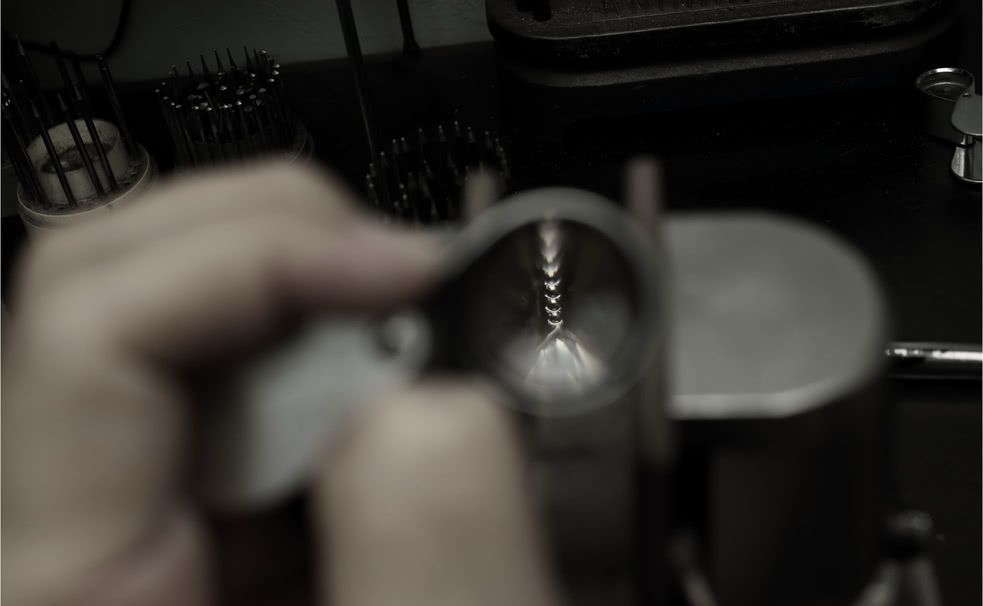
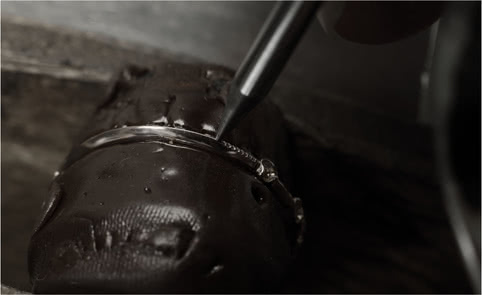
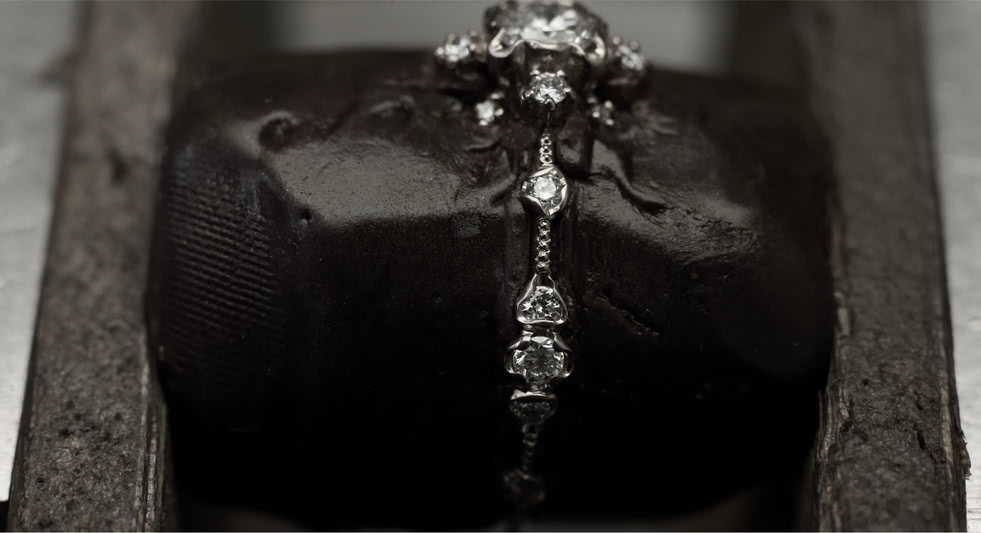
At kataoka, every milgrain bead is engraved by Yoshinobu Kataoka's hand. Not pressed by a machine. Not stamped from a die. Engraved, one bead at a time, using a steel tool whose tip has been shaped over years of use to respond to the specific pressure and angle of one person's grip.
The History of Milgrain
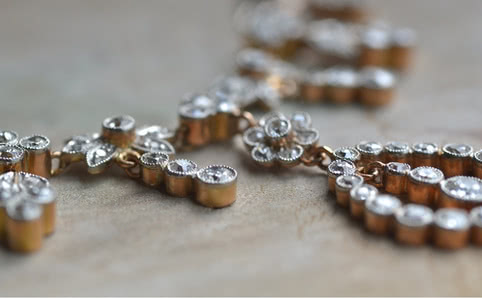
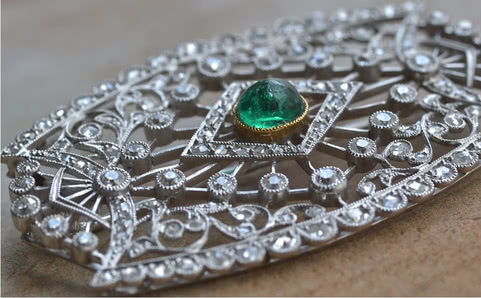
Milgrain appeared in European court jewelry as early as the seventeenth century, most prominently in platinum and white gold pieces during the Edwardian and Art Deco periods. Its function was both structural and aesthetic: the beaded edge softened the visual transition between metal and stone, gave the eye something to follow along a setting's perimeter, and added a texture that made finished pieces feel less like engineering and more like something grown.
By the twentieth century, industrial tooling made it possible to replicate the look of milgrain by machine. The beads became uniform, evenly spaced, identical. Technically correct and visually flat. What disappeared was the quality that had made milgrain remarkable in the first place: the subtle irregularity of a human hand working at the threshold of what is physically controllable.
From Heritage to Modernity
Most milgrain produced today is machine-pressed. The beads are even, the spacing is consistent, and the result is a texture that reads as decorative rather than made. It is the difference between a printed signature and one written by hand. Both carry the same information. Only one carries evidence of the person behind it.
Yoshinobu Kataoka's milgrain belongs to the handwritten category. His approach draws on a tradition that predates industrial production, but his intent is not nostalgic. The irregularity in his beading is not accidental, and it is not imperfection in the way that word is typically understood. In Japanese craft philosophy, this quality has a name: wabi-sabi, the recognition that beauty is inseparable from the marks of its own making. A bead engraved by hand is alive in a way that a stamped bead is not, because it carries the pressure, the tempo, and the specific judgment of a single moment of contact between tool and metal.
A Study in Perfection
Consider what 0.2 millimeters means in practice. It is roughly the thickness of two sheets of paper. Each bead must be engraved at consistent depth and spacing along a curved surface, often on a band no wider than a few millimeters itself. The margin for correction is effectively zero. A bead placed too deep cannot be undone. A bead spaced unevenly disrupts the rhythm of every bead that follows.
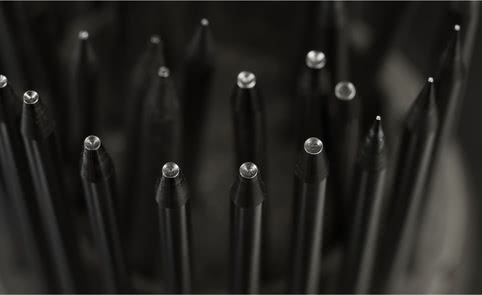
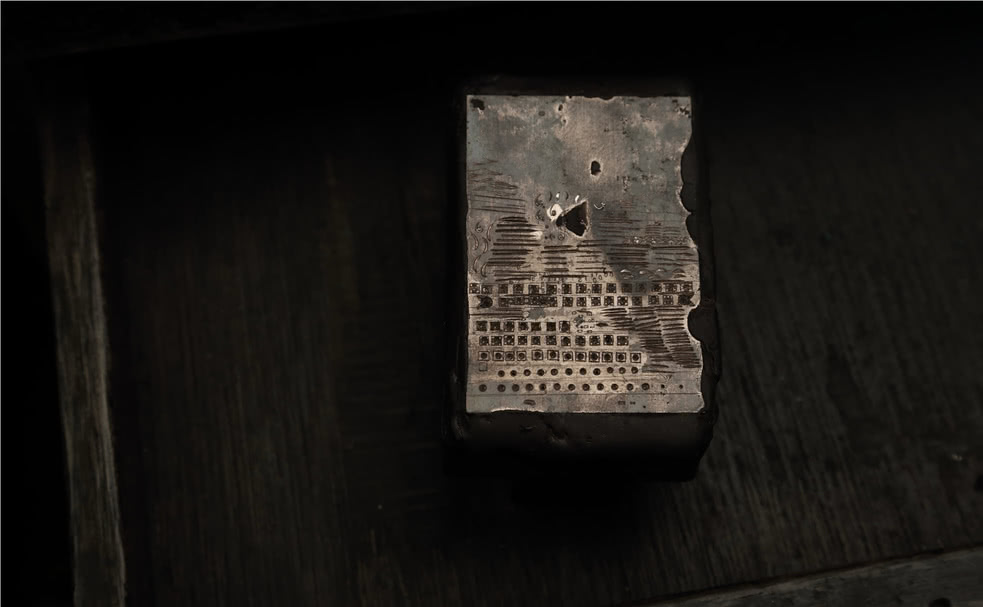
The tool Yoshinobu uses is not a generic instrument. It is a steel engraving point, shaped and reshaped over years to match the exact angle at which he holds it, the exact pressure he applies. No one else can use this tool to the same effect, because no one else has the same hand. This is not metaphor. It is mechanical fact: the tool has been calibrated, through use, to one person's motor memory.
Only a handful of jewelers working today can execute milgrain at this scale by hand. Fewer still choose to, when machines can approximate the look in a fraction of the time. What the machine cannot approximate is the life in the surface, the way hand-engraved milgrain catches light at slightly different angles along its length, producing a shimmer that shifts as the piece moves. Machine milgrain is static. Hand-engraved milgrain breathes.
kataoka Milgrain
What makes kataoka's milgrain distinct is not the technique alone but the context it operates in. Yoshinobu Kataoka trained in Tokyo, studied European classical jewelry making, and returned to a practice that synthesizes both traditions without subordinating one to the other. The precision of his milgrain is European in its discipline. The sensibility, the willingness to let the hand's presence remain visible, is Japanese.
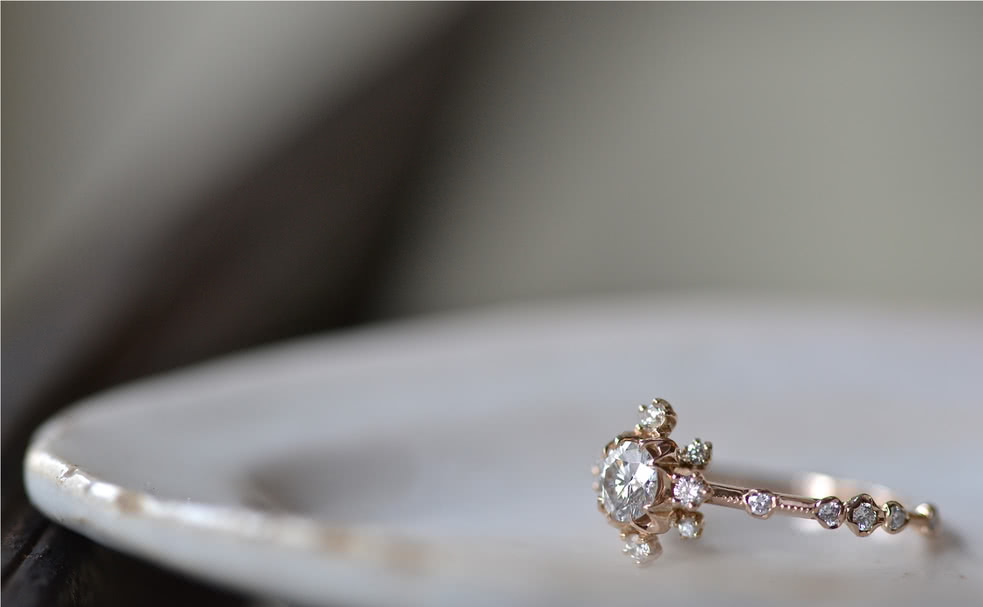
This is not fusion for its own sake. It is the product of a maker who has internalized two traditions deeply enough to work between them without performing either. The milgrain on a kataoka ring does not announce itself. It rewards attention. Seen from across a room, it registers as a quality of light along the edge of the metal. Seen up close, it reveals itself as hundreds of individual beads, each one placed by a hand that understands what it is doing at a resolution most people will never see.
The Essence of Milgrain
Milgrain is, in the end, an argument for the value of difficulty. It is a technique that exists at the boundary between what a human hand can control and what it cannot. The beauty of it is not in the pattern itself but in the knowledge, conscious or not, that someone chose the hard way because the hard way produces something that the easy way never will.
At kataoka, that choice is made on every piece that carries a milgrain edge. It is not a decorative option. It is a statement about what this house believes jewelry should be: evidence of a maker's hand, visible to anyone who looks closely enough to find it.