Most jewelry is designed by addition. A setting is built, a stone is placed, a detail is layered on until the piece feels complete. The Less is More collection begins from the opposite direction. Yoshinobu Kataoka starts with a finished idea and removes everything that does not earn its place. What remains is not simple. It is reduced, which is a different thing entirely. Simplicity is easy. Reduction requires knowing exactly what to take away without losing the structure that holds the piece together.
The result is jewelry that appears effortless but is, in mechanical terms, among the most demanding work kataoka produces. When there is no ornament to absorb the eye's attention, every element that remains is fully exposed. The quality of the metal, the precision of a single stone's placement, the weight of the chain, all of it is visible because nothing else is competing for notice.
The Floating Diamond
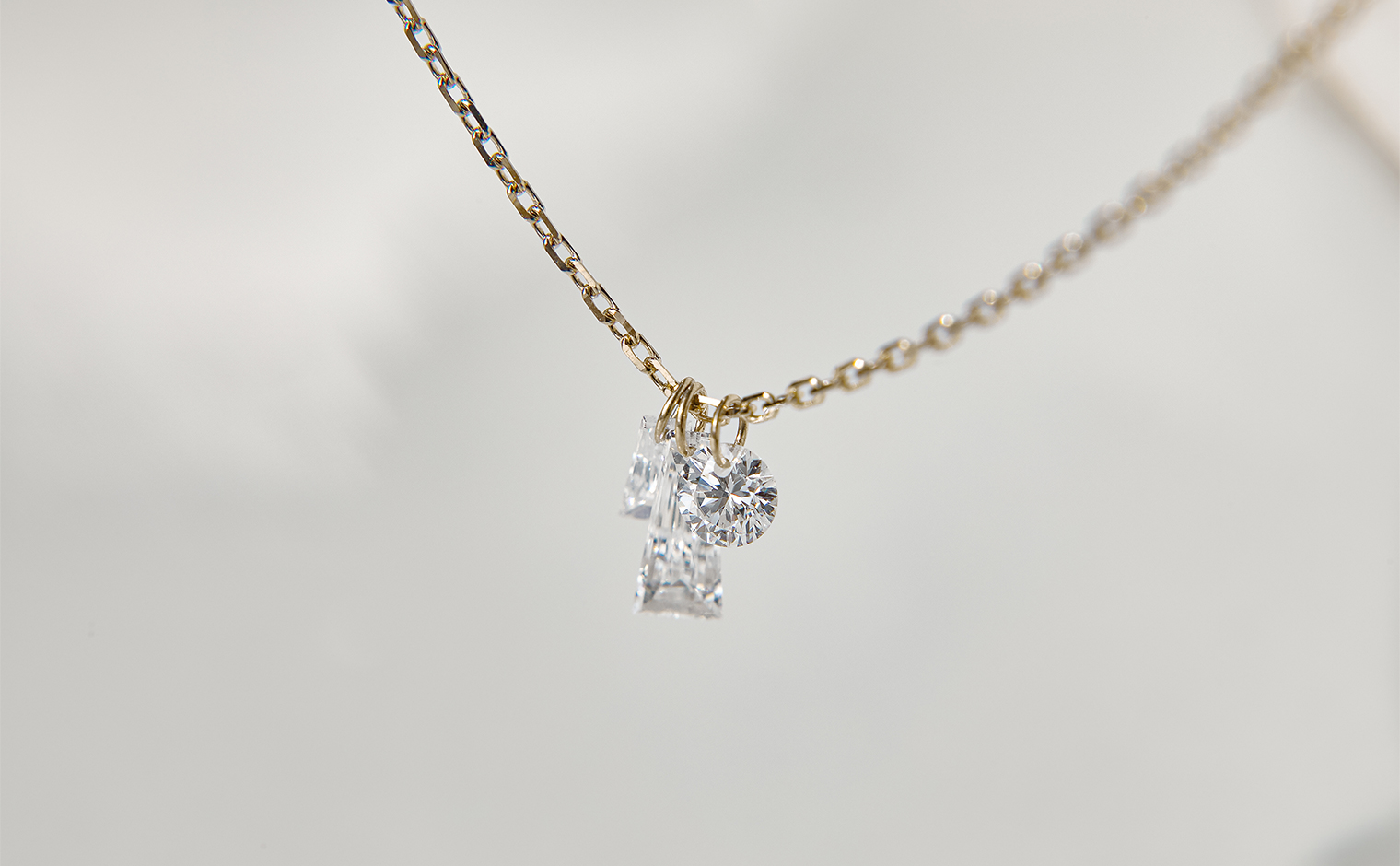
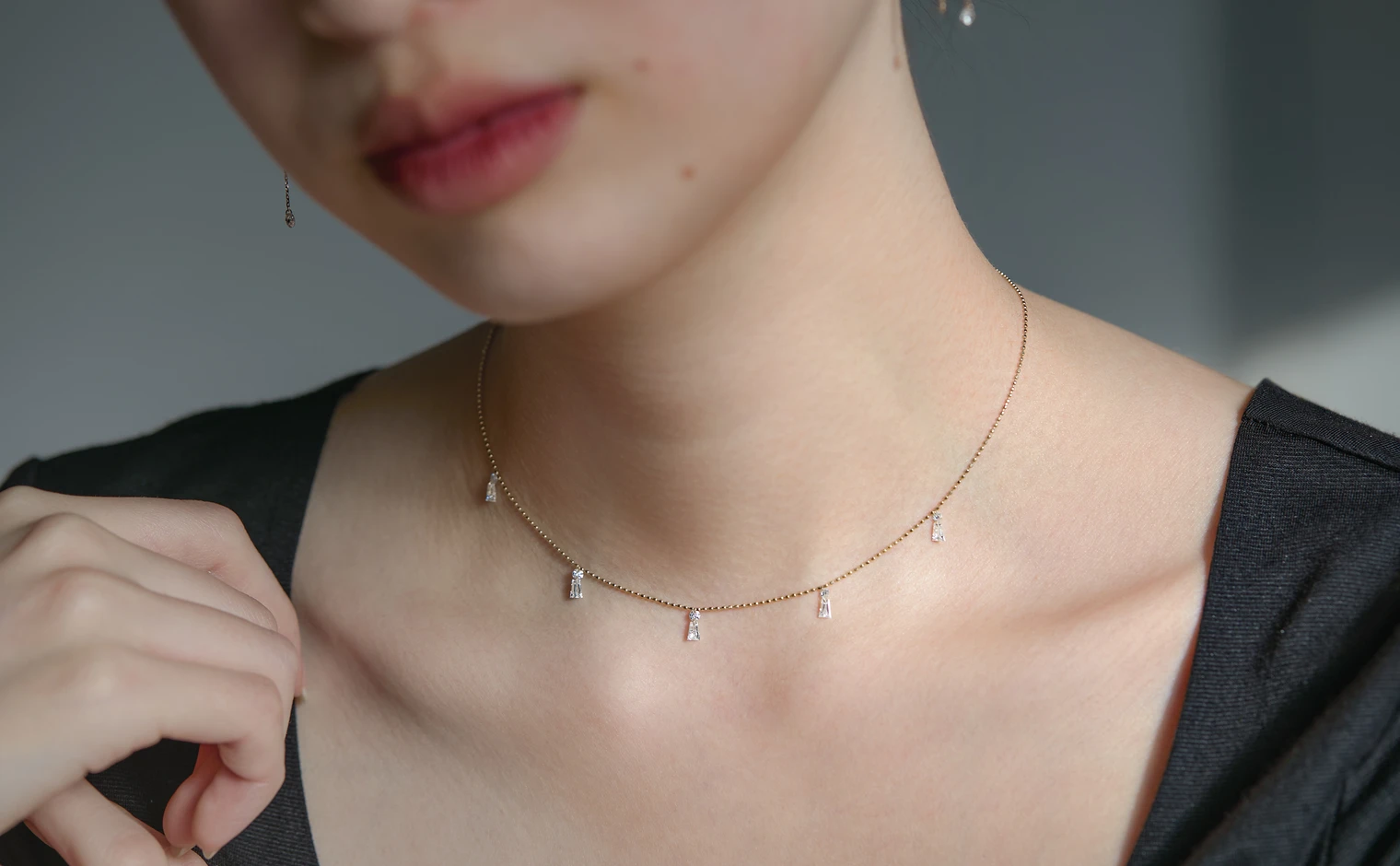
The signature of the Less is More collection is a diamond that appears to hover on the chain with no visible setting. This is not an illusion. The diamond is laser-drilled through its girdle, a microscopic channel bored through the stone itself. A small hoop passes through that channel, and the chain passes through the hoop. No metal setting touches the stone. It moves freely, catching light from every direction because nothing is obstructing it.
Laser drilling a diamond at this precision is a controlled risk. The channel must be perfectly centered and its diameter must match the hoop exactly. Too wide and the stone sits loosely, tilting on the chain. Too narrow and the hoop cannot pass through. The tolerance is measured in fractions of a millimeter. What makes the technique remarkable is not the technology but the decision to use it: Yoshinobu Kataoka chose to eliminate the setting entirely rather than miniaturize it, because the absence of metal around the stone changes the way it interacts with light.
The Metal Itself
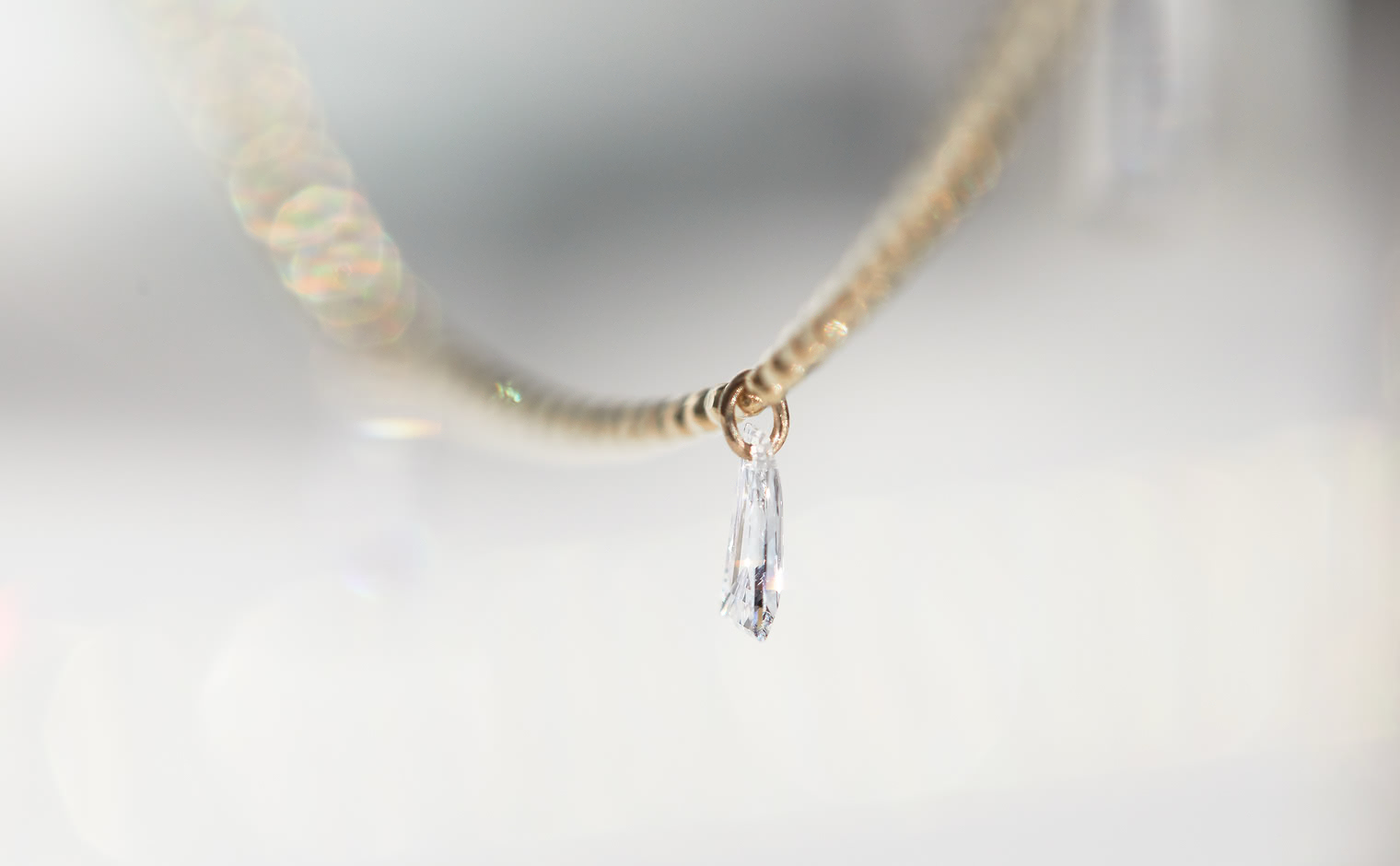
In pieces with minimal design, the metal is not a background material. It is the design. The Less is More collection is offered in three metals: kataoka's proprietary 18-karat beige gold, 18-karat rose gold, and platinum 900. Each reads differently against skin, under different light, and alongside different stones. Beige gold has a warmth and color density that standard yellow alloys do not achieve. Rose gold introduces a cooler pink undertone that shifts depending on ambient light. Platinum 900 is the most neutral, a quiet silver-white that recedes behind the stone entirely. In a heavily ornamented piece, these differences are nuance. In a Less is More chain or band, they are the entire visual experience.
This is why reduction in design demands more from the material, not less. Every surface is exposed. Every link in a chain is visible. The metal's color, its finish, the way it responds to skin temperature and ambient light are all unmediated by settings, stones, or texture. If the alloy is ordinary, the piece looks ordinary. The choice between beige gold, rose gold, and platinum is not a preference menu. It is a design decision that determines the character of the finished piece, because in the Less is More collection, the metal carries the entire weight of the design on its own.
Engineered Lightness
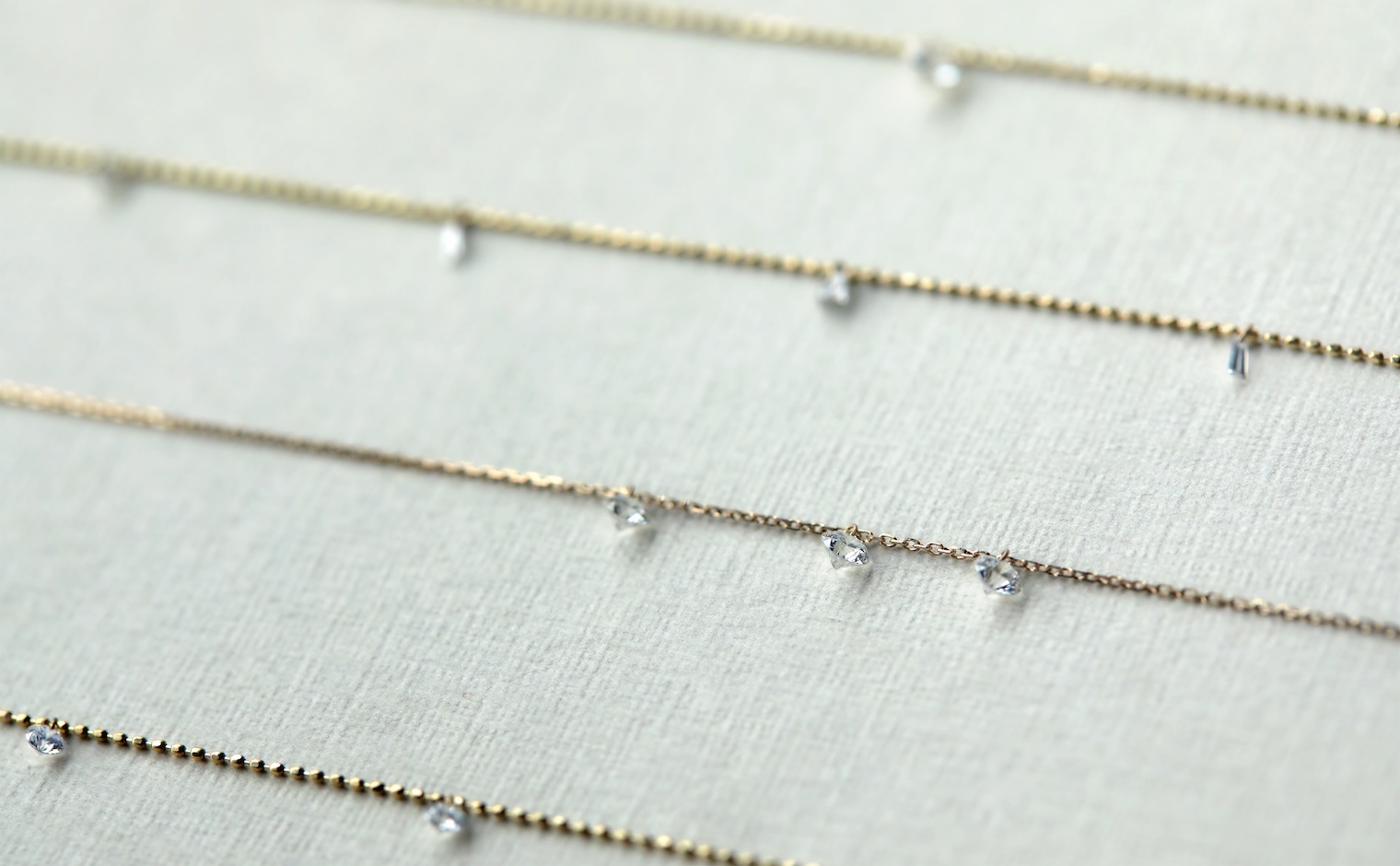
Weight in jewelry is often equated with value. Heavier feels more substantial, more expensive, more real. The Less is More collection inverts this assumption. The pieces are engineered to be as light as structurally possible, not to save material but because lightness changes the way jewelry is experienced on the body. A chain that disappears against the skin occupies a different relationship with the wearer than one that announces its presence through weight.
This is a design philosophy borrowed from Japanese spatial thinking: ma, the value of emptiness, the idea that what is absent defines what is present. A Less is More necklace is defined as much by what it is not (heavy, ornate, attention-seeking) as by what it is (light, precise, self-contained). The negative space is the point.
What Reduction Reveals
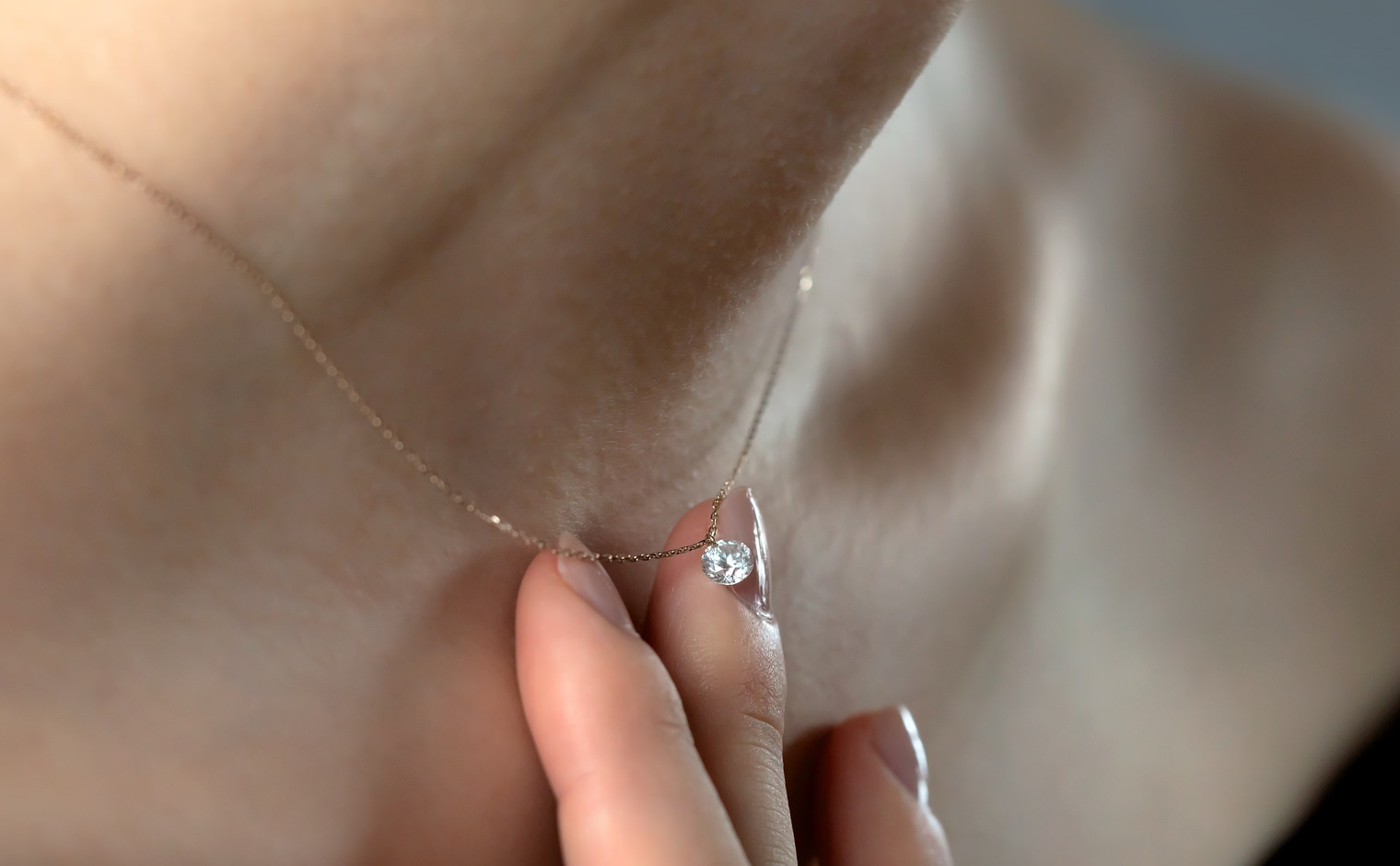
There is a practical consequence to designing by subtraction: the piece either works or it does not. An ornate piece can absorb a minor imperfection in proportion because the eye is busy. A Less is More necklace has nowhere to hide. If a link is fractionally uneven, it shows. If the polish is inconsistent, it shows. If the diamond is off-center on the chain, the entire composition collapses. This is the paradox of minimalist design in fine jewelry: the less material there is, the higher the standard of execution required.
Yoshinobu Kataoka does not treat the Less is More collection as a simpler line within kataoka's range. He treats it as the most exposed. Every decision is final, every element is load-bearing, and the finished piece is either exactly right or it is not a kataoka piece. There is no middle ground when there is nothing left to adjust.
The Discipline of Absence
Minimalism in jewelry is a crowded claim. Every brand with a thin band and a solitaire calls itself minimal. What distinguishes kataoka's approach is that the reduction is not aesthetic preference. It is a technical and philosophical position. The laser-drilled diamond is not a stylistic choice. It is a structural decision that changes the optical behavior of the stone. The three metal options are not a branding exercise. Each alloy and each platinum formulation exists because when the metal is the design, the metal must be exceptional. The engineered lightness is not about comfort marketing. It is about a Japanese spatial concept that treats emptiness as a form of content.
Less is More is not kataoka's simplest collection. It is the collection where every decision is most visible, most irreversible, and most exposed. It is, in that sense, the most demanding work the house produces. What you see when you look at a Less is More piece is not the absence of design. It is design with nothing left to remove.