A hand-engraved line is not drawn. It is cut. A steel tool called a graver is pushed into metal at a controlled angle, and a fine ribbon of gold or platinum curls away from the surface as the tool advances. The line that remains is not sitting on the metal. It is carved into it, a permanent channel whose depth, width, and direction were determined in real time by the pressure and rotation of a single hand.
This is the oldest form of mark-making in jewelry. Before settings, before stone cutting, before casting, there was a point pressed into metal. At kataoka, hand-engraving remains central to every piece Yoshinobu Kataoka makes, not as ornament, but as structure. The engraved line is where the maker's judgment is most exposed, because every cut is irreversible. There is no undo. There is only the next line.
The Oldest Mark
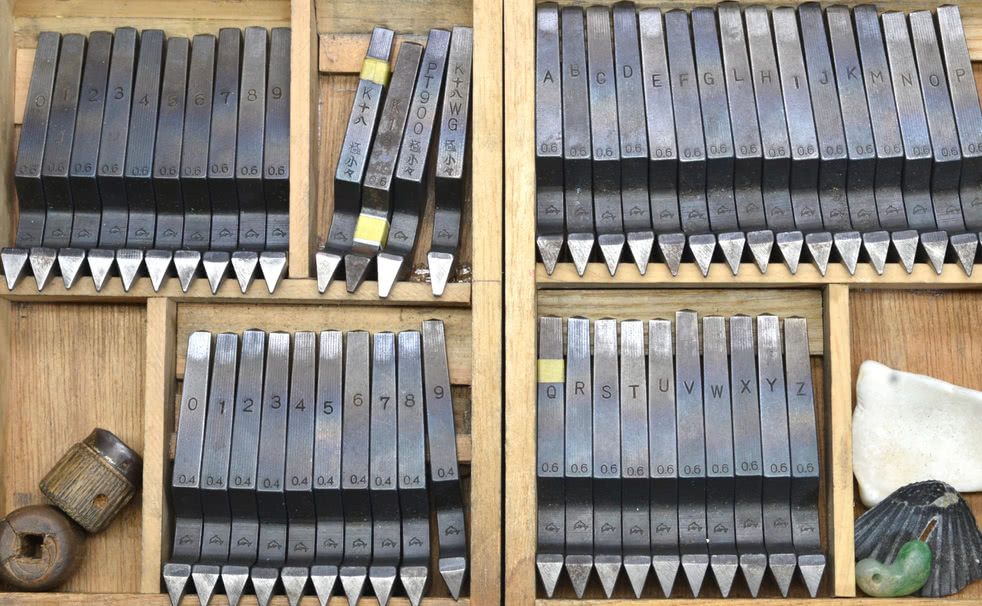
Engraving predates almost every other technique in the jeweler's vocabulary. Egyptian goldsmiths used sharpened bronze points to inscribe protective symbols into amulets more than three thousand years ago. Roman artisans carved family crests into signet rings that functioned as both identity and legal seal, pressed into wax to authenticate documents. By the European Renaissance, engraving had become one of the defining skills of the master goldsmith, a measure of control so fine that a single slipped line could ruin months of work.
What connects these traditions across centuries and continents is the same basic proposition: one person, one tool, one irreversible cut. The materials have changed. The fundamental act has not. When Yoshinobu Kataoka engraves a line into 18-karat gold, he is performing an operation that would be recognizable to a Roman jeweler. The tool is more refined. The intention is the same.
The Graver
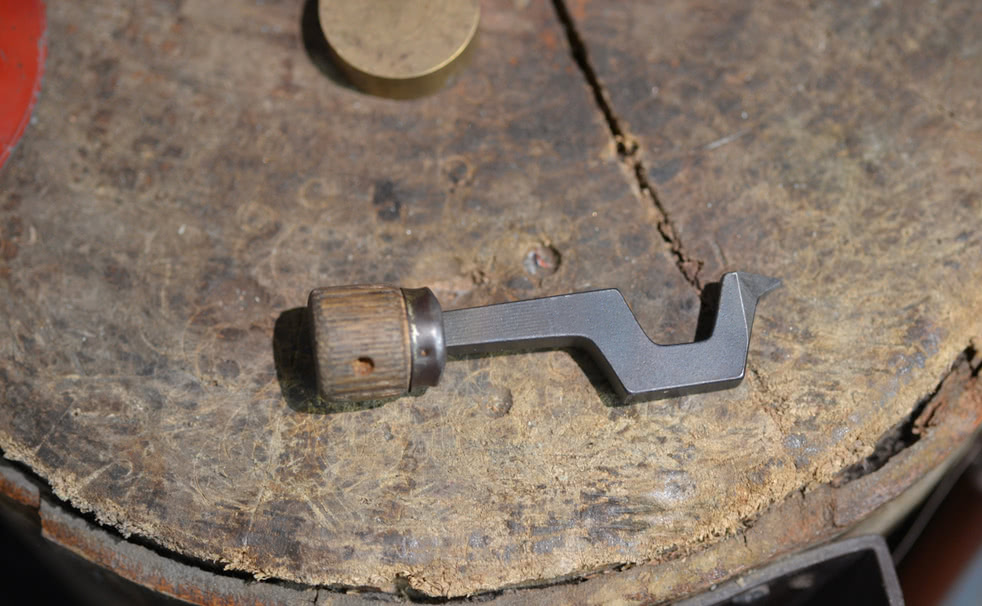
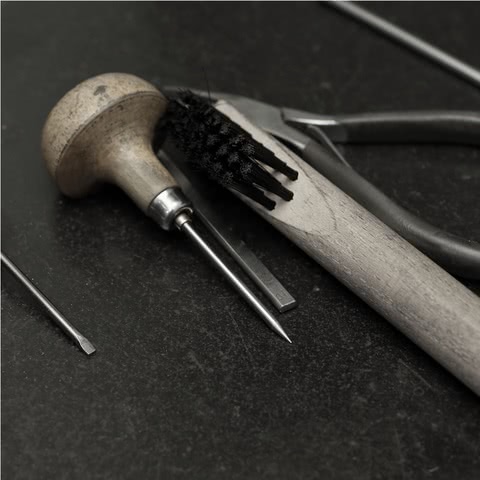
The graver is a deceptively simple instrument: a short steel shaft with a sharpened point, set into a handle that fits against the palm. The point is ground to a specific geometry that determines the width and profile of the cut. A flat graver produces a clean, bright line. An angled graver removes metal in a V-shaped channel that catches light differently depending on the viewing angle. The choice of point, the angle of approach, and the speed of the push all affect what the finished line looks like and how it interacts with the surface around it.
Yoshinobu Kataoka's gravers are not interchangeable tools. Each one has been shaped by his hand over years of use. The point geometry, the handle wear, the balance of the instrument are all specific to the way he works. A different engraver could hold the same graver and produce a different result, because the tool has been unconsciously calibrated to one person's grip, pressure, and tempo. This is why hand-engraving cannot be taught by manual alone. It is transmitted through repetition until the tool becomes an extension of motor memory rather than something held.
What the Machine Cannot Do
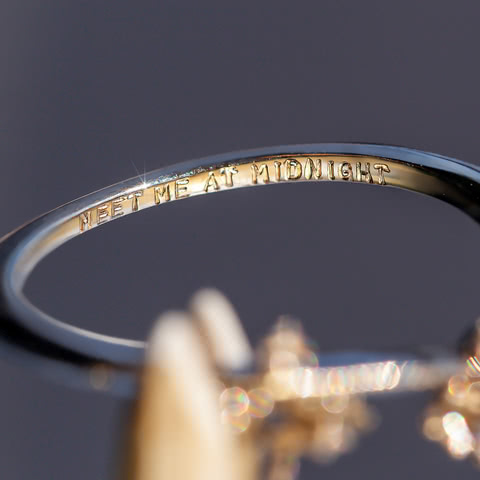
CNC engraving and laser etching can reproduce the geometry of a hand-engraved line with impressive accuracy. What they cannot reproduce is variability. A machine-cut line has the same depth, the same width, and the same angle from start to finish. It is consistent in the way that a photocopy is consistent. A hand-engraved line modulates. The depth shifts as the graver crosses a curve. The width changes where the engraver adjusted pressure instinctively to maintain the visual weight of the line against a thinner section of metal. These modulations are not errors. They are the reason hand-engraved jewelry looks alive under changing light while machine-engraved jewelry looks the same from every angle.
There is a parallel here with kataoka's milgrain work, which is itself a specialized form of hand-engraving. The same principle applies: the human hand introduces a variability that the eye registers as life, even when the viewer cannot consciously identify what makes the surface different. This is not a romantic claim. It is an optical fact. Irregular surfaces scatter light in more directions than uniform ones, producing a visual complexity that uniform machine work cannot achieve.
Two Traditions, One Line
European engraving tradition prizes control: clean geometry, even depth, symmetry that demonstrates command of the tool. Japanese craft tradition, rooted in concepts like wabi-sabi and ma, values the space around the mark as much as the mark itself, and recognizes that the trace of the maker's hand is not a flaw to be eliminated but a quality to be preserved.
Yoshinobu Kataoka works at the intersection of these two positions. His lines are controlled but not sterile. His surfaces are precise but not mechanical. The engraving on a kataoka piece does not overwhelm the form it sits on. It occupies exactly the space it needs, and the restraint of what is left unengraved is as deliberate as what is cut. This balance is not accidental. It is the product of decades spent training in both traditions until neither dominates the other.
Evidence
Every engraved line on a kataoka piece is a record. It records the angle of the tool, the speed of the hand, and the specific decisions made in the fraction of a second between approaching the surface and committing to the cut. It cannot be replicated exactly, not even by the same engraver on the same piece, because the conditions of each cut are unrepeatable. This is what makes hand-engraving fundamentally different from any process that can be scaled, copied, or automated.
What you hold when you hold a hand-engraved kataoka ring is not just a piece of jewelry. It is physical evidence that a specific person, on a specific day, made a series of irreversible decisions in metal, and every one of them was right.